Kai Berger · 2 October 2026
Harvest Success Along the Banks: First Yield from Creekside's Community Garden Project
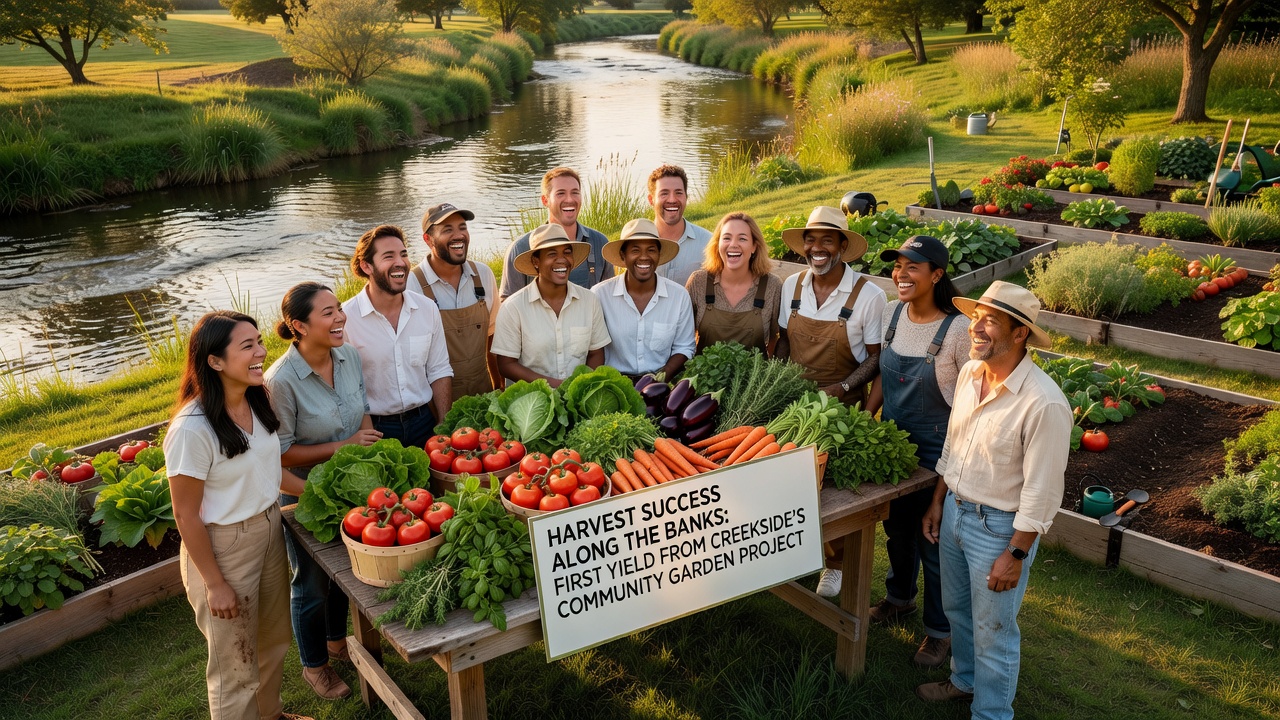
Community members in Creekside gathered along the creek banks in early October 2026 to collect the first produce from the newly established community garden project, marking a milestone in local efforts to expand urban agriculture along waterways. The initiative began with site preparation in 2024 when volunteers cleared invasive species and installed raised beds on previously underused land near the water's edge, and organizers coordinated with local authorities to ensure soil testing met safety standards before planting commenced. Data from similar projects across North America shows that creek-adjacent gardens often yield higher volumes of leafy greens and root vegetables when proper drainage systems are in place, and Creekside's setup incorporated those lessons through consultation with agricultural extension services. Participants planted a mix of tomatoes, beans, squash, and native herbs in spring 2026, selecting varieties suited to the region's climate patterns while incorporating companion planting techniques to reduce pest pressure without chemical inputs.Project Development and Site Preparation
Planning for the garden drew on reports from the U.S. Department of Agriculture regarding urban farming best practices, which emphasize soil health and water management in riparian zones. Crews installed permeable pathways and native plant buffers to prevent erosion, and they worked with engineers to integrate rainwater collection barrels that supplement irrigation during dry spells. By midsummer the beds supported dense growth, and regular monitoring by volunteers tracked moisture levels and nutrient balance through simple field tests.
Those involved noted that coordination with nearby residents helped address concerns about access and maintenance, leading to a shared schedule for watering and weeding duties. The layout divides plots into individual and communal sections so that both personal harvests and group distributions can occur, and signage explains the project's goals to passersby on adjacent trails.
First Harvest Details and Distribution
By October 2026 the garden produced its initial substantial yield, with volunteers recording collections of over 800 pounds of vegetables across multiple pickup days. Tomatoes and beans formed the bulk of the early harvest, while squash and herbs filled out later collections, and surplus produce went to local food banks through an established partnership. Organizers tracked quantities using simple spreadsheets shared among participants, allowing for transparent reporting on output volumes and distribution destinations.
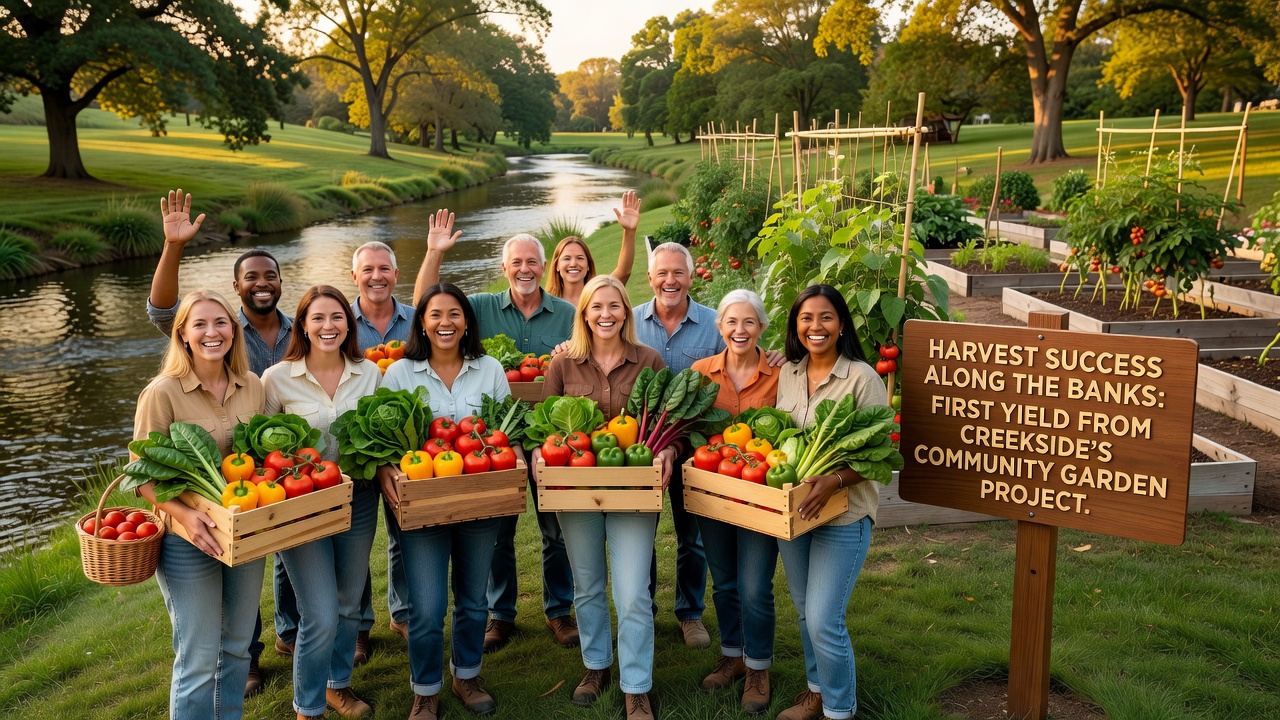
One volunteer group focused on preservation workshops that taught canning and drying methods, extending the usability of perishable items beyond the immediate season. Figures from the project show that roughly 40 percent of the harvest stayed with individual plot holders, while the remainder supported community meals and donations, and similar allocation patterns appear in records from comparable gardens in other regions.
Community Participation and Educational Components
Workshops held throughout the growing season covered topics such as pollinator support and composting, drawing attendees from surrounding neighborhoods and schools. Sessions incorporated demonstrations from local master gardeners who shared techniques for maximizing space in linear plots along waterways, and attendance records indicate steady participation across age groups. The project also connected with nearby educational programs that use the garden as an outdoor classroom for lessons on plant biology and watershed ecology.
Observers note that involvement extended beyond planting and harvesting to include maintenance of shared tools and equipment, with a rotating responsibility system that kept operations running smoothly. Partnerships with regional research institutions provided occasional soil analysis updates, helping participants adjust practices based on measured pH and nutrient data rather than assumptions alone.
Environmental Considerations and Ongoing Monitoring
The garden's location along the creek required careful attention to runoff management, and project leads implemented buffer strips of native grasses that filter water before it reaches the main channel. Studies conducted by Australian research centers on riparian agriculture informed some of these choices, highlighting the value of vegetative barriers in maintaining water quality. Ongoing data collection tracks biodiversity indicators such as insect populations and bird activity around the plots, contributing to a broader understanding of how small-scale gardens interact with creek ecosystems.
Participants continue to log observations in a shared digital platform, and the information feeds into annual reports submitted to local environmental agencies. These records help identify trends in yield variability tied to weather patterns, and adjustments for the next season will incorporate findings from the 2026 cycle.
Conclusion
The initial harvest from Creekside's community garden demonstrates how coordinated local efforts can produce measurable food output while supporting site-specific environmental measures along waterways. Continued documentation of yields, participation levels, and ecological indicators will guide future expansions, and project records remain available for review by interested residents and partner organizations. The October 2026 collections establish a baseline against which subsequent seasons can be compared as the project evolves.